Van Stocktake: How to Do It in 15 Minutes

Stocktake has a bad reputation: a lost day, unreadable count sheets, numbers you cannot make use of. On a van, though, it can take a quarter of an hour, if you change the method.
Why run a stocktake of your van
Even with every exit properly recorded, theoretical stock and actual stock end up drifting apart: a part broken and thrown away, a consumable used without being logged, a favour between colleagues. A stocktake puts the counters back in line so your low-stock alerts stay reliable. Without it, you stop trusting your numbers and go back to checking in the van.
Before you start: 3 minutes of preparation
- Pick the right moment: at the end of the day or before the first departure, when the vehicle is parked and no exit is in progress.
- Tidy first, count after: put every part back in its bin. Counting a messy van means counting the same thing twice.
- One location at a time: one vehicle, or the workshop, but not both at once.
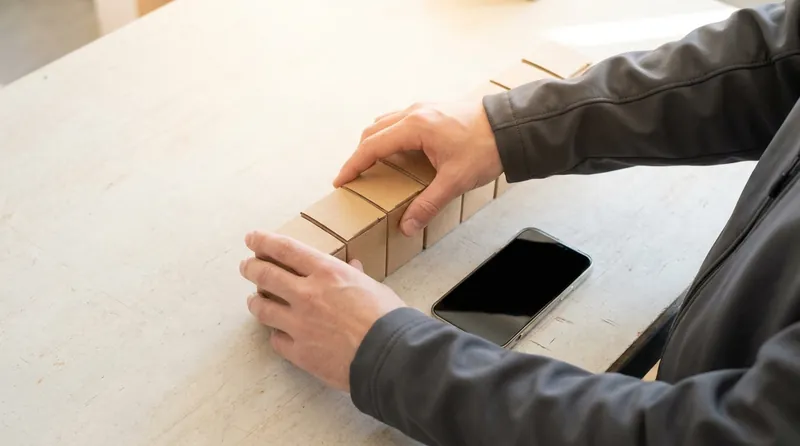
The method: count item by item, record only the differences
The classic mistake is to recount everything and then re-enter everything. It is slow, and that is where typing errors creep in. The efficient method:
- You follow the vehicle's list of items, in storage order.
- For each item, you count what is actually there.
- If the number matches, you move on to the next: nothing to enter.
- If it differs, you correct the quantity: only that difference is recorded.
On a vehicle with 50 to 100 references, most lines are right: you only enter a few differences. That is what brings the stocktake down to 15 minutes.
A guided stocktake in an app follows exactly this principle: it shows you the items one by one and keeps the count in progress if you are interrupted by a call or an emergency.

What to do about discrepancies?
A discrepancy is not a fault, it is information. Look at them once the stocktake is finished:
- An isolated discrepancy (one part short): a forgotten exit, correct it and move on.
- The same item off every month: it is probably being used without being logged. Make its exit simpler, or put it in a job kit with the parts that always go together.
- A positive discrepancy (more parts than expected): often an unrecorded delivery. Get into the habit of recording deliveries as soon as they arrive.
Keep a record: a stocktake history with the date, the person and the corrected quantities lets you spot these trends.
How often should you stocktake a vehicle?
For a service van, once a month is a good rhythm: often enough for discrepancies to stay small, rare enough not to become a chore. Add a one-off stocktake:
- when a vehicle changes technician;
- after a period of heavy activity or a big job;
- at the end of the financial year, to value the stock.
And the workshop?
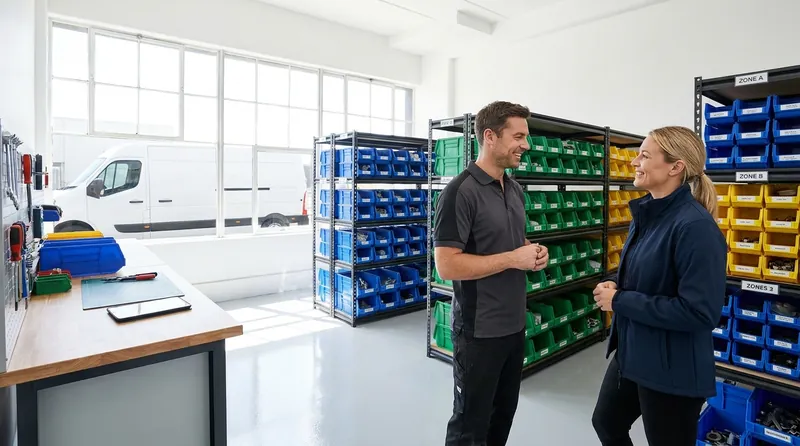
The same method works for the workshop or depot, with more references. Split it into zones or categories and do one per week rather than everything on the same day.
In short
- Tidy before counting, one location at a time.
- Count item by item and record only the differences.
- Analyse the discrepancies that keep coming back.
- One stocktake a month per vehicle.
For the stocktake to stay quick, you still need well-kept stock day to day: see How to manage your van stock as a tradesperson: a simple method.
Frequently asked questions
How long does a stocktake of a service van take?
With a tidy vehicle and a method that only records differences, allow about 15 minutes for 50 to 100 references.
How often should you do a van stocktake?
Once a month is a good rhythm for a service van, plus a one-off stocktake when the vehicle changes technician or at the end of the financial year.
Do you have to re-enter every quantity during a stocktake?
No. Count each item, but only correct the quantities that differ from the recorded stock. It is faster and limits entry errors.
Read next
Article published on the VanStock blog: https://vanstock.app/en/blog/van-stocktake-15-minutes/